When we look back at our wedding photos, we usually remember much more than the outfits or decorations. We remember the nervous smiles before the ceremony, the laughter between family members, and those quiet moments that happened in the middle of all the celebrations.
Photographs freeze those memories forever, but recently I discovered something that gave them an entirely different feeling.
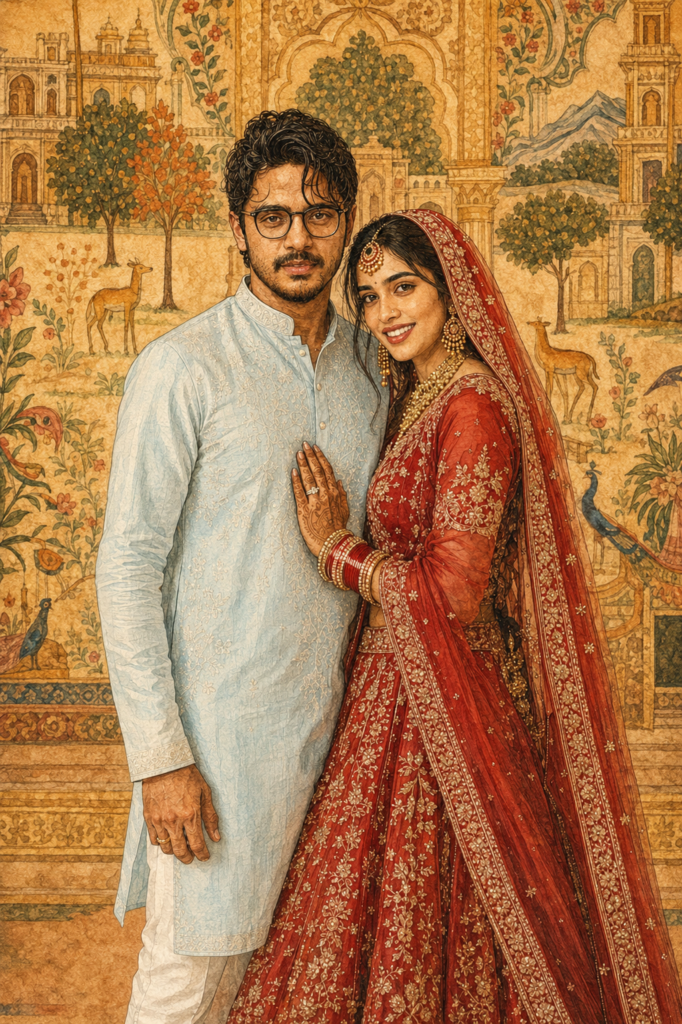
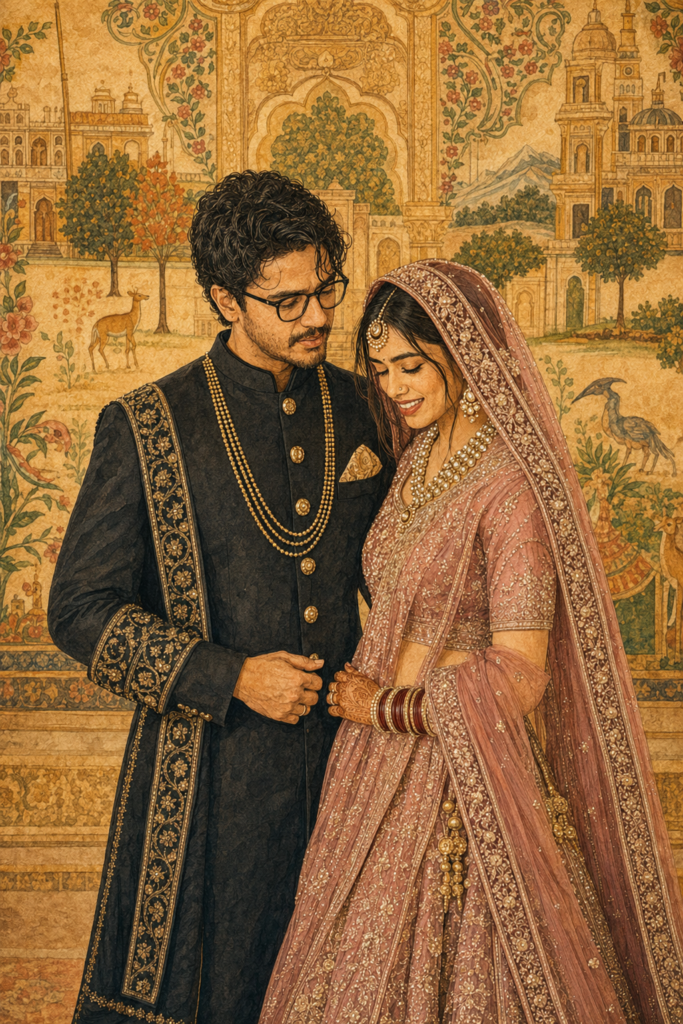
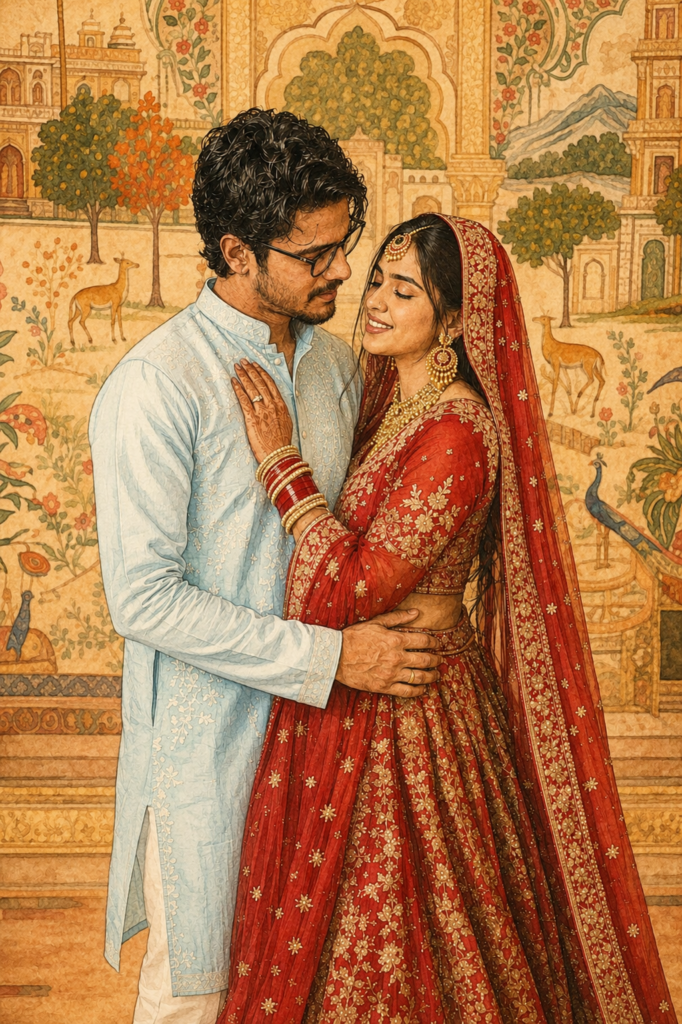
Instead of editing my wedding pictures with ordinary filters, I transformed them into artwork inspired by traditional Indian miniature paintings. The result honestly surprised me. The photos still looked like us—our faces, expressions, clothes, and even the background remained the same—but the entire image felt as if it had been painted by hand on an old heritage canvas.
That’s exactly what makes this style different from most AI-generated images.
It Doesn’t Create a New Photo—It Reimagines the Original One
Most people think AI completely changes a picture. In many cases, that’s true. Faces become different, skin tones change, hairstyles are replaced, and sometimes the people don’t even look recognizable anymore.
For wedding memories, that’s the last thing anyone wants.
What impressed me about this style is that nothing important changes. Every smile, every piece of jewellery, every fold in the outfit and even the way two people are standing together stays exactly where it was in the original photograph.
The only thing that changes is the artistic texture.
Your photo starts looking like it belongs inside an old palace or museum instead of a phone gallery.
✨ AI Prompt
STRICT IDENTITY LOCK (HIGHEST PRIORITY): Use the uploaded boy reference image as the ONLY facial identity reference for the groom and the uploaded girl reference image as the ONLY facial identity reference for the bride. Preserve both faces exactly as they appear in the reference images, including facial structure, eyes, eyebrows, nose, lips, jawline, skin tone, hairstyle, facial hair (if any), glasses (if present), age, expression, and natural proportions. Do NOT beautify, reshape, blend, replace, or generate different faces. Both identities must remain 100% identical to their respective reference images. Create a traditional Mughal miniature painting instead of a realistic photograph. The couple stands side-by-side facing the viewer in a graceful royal pose. The groom wears a pastel powder-blue embroidered kurta with delicate white floral threadwork and white pajama. The bride wears a luxurious crimson-red bridal lehenga with intricate antique gold zari embroidery, a richly embroidered red dupatta covering her head, traditional bridal jewelry, bangles, maang tikka, necklace, earrings, and detailed mehndi. Her right hand gently rests on the groom’s chest while both smile softly. The background should be a richly decorated Mughal palace mural with carved arches, miniature palace architecture, flowering vines, peacocks, deer, trees, floral borders, distant mountains, and Persian-inspired ornamentation. Texture Style (Very Important): Authentic Mughal miniature manuscript painting, hand-painted gouache and watercolor on aged parchment paper, visible handmade paper fibers, antique tan paper texture, delicate ink outlines, muted earthy pigments, faded ochre and sepia tones, intricate floral borders, ornamental detailing, slightly weathered manuscript appearance, flat yet highly detailed painted perspective, historical Indian miniature artwork, museum-quality heritage illustration, soft matte finish, subtle pigment granulation, handcrafted brush strokes, ultra-detailed textile embroidery, no modern digital painting look, no photorealism, masterpiece, ultra-high detail, 8K, vertical 4:5 composition.
✨ AI Prompt
STRICT IDENTITY LOCK (HIGHEST PRIORITY):
Use the uploaded boy reference image as the ONLY identity reference for the groom and the uploaded girl reference image as the ONLY identity reference for the bride. Preserve both faces perfectly without changing any facial features, hairstyle, beard, glasses, skin tone, proportions, age, or expressions. Never replace or beautify either face.
Create an elegant Mughal miniature wedding portrait. The groom wears a luxurious black embroidered sherwani decorated with antique gold embroidery, royal buttons, layered pearl malas, embroidered stole, and matching pocket square. The bride wears a soft dusty-rose bridal lehenga richly embroidered with gold thread, matching veil draped over her head, pearl jewelry, bangles, and intricate mehndi. Both stand close together, gently looking downward with peaceful smiles, creating a timeless romantic moment.
The background is filled with detailed Mughal palace architecture, carved sandstone arches, flowering gardens, Persian floral vines, peacocks, deer, decorative borders, ancient palace walls, and distant hills painted in classic miniature style.
Texture Style (Must Match Reference):
Traditional Indian Mughal miniature illustration, handmade parchment manuscript texture, watercolor and gouache pigments, antique handmade paper with visible grain, delicate ink contour lines, warm sandstone palette, muted gold and ochre colors, vintage manuscript appearance, hand-painted brushwork, intricate ornamental floral patterns, miniature painting perspective, museum-quality heritage artwork, soft matte pigment finish, natural pigment texture, historical royal manuscript aesthetics, extremely detailed embroidery, no glossy digital rendering, no photographic realism, ultra-detailed masterpiece, 8K, vertical composition.
✨ AI Prompt
STRICT IDENTITY LOCK (HIGHEST PRIORITY):
Use the uploaded boy reference image as the ONLY facial identity reference for the groom and the uploaded girl reference image as the ONLY facial identity reference for the bride. Preserve both faces with absolute identity accuracy, including hairstyle, beard, glasses, eyes, eyebrows, nose, lips, jawline, skin tone, expressions, and overall facial proportions. Do not modify, beautify, stylize differently, or replace either identity.
Create a romantic Mughal miniature painting showing the couple embracing. The groom wears a pastel blue embroidered kurta with delicate floral threadwork and white pajama. He gently places one arm around the bride’s waist while looking lovingly into her eyes. The bride wears a magnificent deep red bridal lehenga adorned with intricate antique gold embroidery, matching bridal dupatta over her head, elaborate bridal jewelry, bangles, necklace, earrings, maang tikka, and beautifully detailed mehndi. She softly places one hand on the groom’s chest while smiling affectionately.
The background is an elaborately illustrated Mughal palace garden featuring sandstone architecture, floral arches, Persian botanical motifs, peacocks, deer, flowering trees, palace courtyards, carved marble panels, and decorative miniature borders.
Texture Style (Exact Reference Look):
Authentic Mughal miniature manuscript illustration, hand-painted gouache and watercolor on antique parchment paper, visible aged paper fibers, faded warm beige background, delicate brown ink linework, muted earthy pigments, ochre, burnt sienna, olive green, antique gold palette, handcrafted miniature brush detailing, flat ornamental composition, richly textured floral borders, museum-quality Indian heritage manuscript style, matte pigment finish, subtle paper grain throughout the artwork, historical painting aesthetics, no modern digital painting effects, no photorealism, ultra-detailed masterpiece, 8K, vertical 4:5 aspect ratio.
The Small Details Are What Make It Beautiful
After zooming into the final illustrations, I noticed details I wasn’t expecting.
The embroidery on the lehenga still looked intricate.
The groom’s kurta kept all its fabric texture.
Even the henna designs and jewellery remained visible.
The background wasn’t replaced either. Instead, it looked like someone had patiently painted every architectural detail with delicate brush strokes.
That’s probably why these images don’t feel like cartoon filters. They feel like genuine artwork.
Why This Style Works So Well for Wedding Photos
Indian weddings are full of colours, patterns and traditions.
Heavy embroidery, colourful dupattas, gold jewellery, floral decorations and heritage-inspired venues naturally fit into a painting style.
Instead of making everything look artificial, the watercolor and gouache textures actually enhance these traditional elements.
The final image feels warm, timeless and elegant.
Looking at it almost feels like opening an old family album that has been carefully preserved for generations.
It Still Feels Like You
One thing I personally liked was that the emotions didn’t disappear.
The smile was the same.
The eye contact stayed natural.
The pose remained untouched.
Even the little imperfections that make a photograph personal were still there.
That’s something many AI tools struggle with.
When identity is preserved properly, the artwork doesn’t replace your memories—it simply presents them in a different artistic form.
More Than Just Something to Post Online
Of course, these illustrations look amazing on Instagram and Pinterest.
But after seeing them, I felt they deserved something more permanent.
I could easily imagine printing one on a large canvas for the living room or framing it as an anniversary gift. It would also make a beautiful cover for a wedding album or even a personalised gift for parents.
Unlike trendy filters that become outdated after a few months, this style has a timeless quality.
The Secret Is in the Prompt
Creating this type of artwork isn’t just about uploading a photo.
The prompt plays a huge role.
A good prompt tells the AI to preserve the original identity completely while changing only the artistic style.
That’s why the best results keep the same faces, body proportions, outfits, background and camera angle instead of generating an entirely new scene.
Adding artistic directions like soft watercolor, gouache painting, parchment paper texture, Indian miniature painting and heritage mural helps create a much richer result.
Final Thoughts
Technology keeps changing the way we preserve memories, but the memories themselves never change.
This heritage illustration style doesn’t replace photography. Instead, it gives your favourite wedding portraits a completely different personality while respecting everything that made the original picture special.
If you’re someone who loves traditional Indian art or simply wants a unique way to preserve wedding memories, this style is definitely worth trying.
Some photos are beautiful because they’re perfectly captured.
Others become unforgettable because they tell a story.
Contains information related to marketing campaigns of the user. These are shared with Google AdWords / Google Ads when the Google Ads and Google Analytics accounts are linked together.
90 days
__utma
ID used to identify users and sessions
2 years after last activity
__utmt
Used to monitor number of Google Analytics server requests
10 minutes
__utmb
Used to distinguish new sessions and visits. This cookie is set when the GA.js javascript library is loaded and there is no existing __utmb cookie. The cookie is updated every time data is sent to the Google Analytics server.
30 minutes after last activity
__utmc
Used only with old Urchin versions of Google Analytics and not with GA.js. Was used to distinguish between new sessions and visits at the end of a session.
End of session (browser)
__utmz
Contains information about the traffic source or campaign that directed user to the website. The cookie is set when the GA.js javascript is loaded and updated when data is sent to the Google Anaytics server
6 months after last activity
__utmv
Contains custom information set by the web developer via the _setCustomVar method in Google Analytics. This cookie is updated every time new data is sent to the Google Analytics server.
2 years after last activity
__utmx
Used to determine whether a user is included in an A / B or Multivariate test.
18 months
_ga
ID used to identify users
2 years
_gali
Used by Google Analytics to determine which links on a page are being clicked
30 seconds
_ga_
ID used to identify users
2 years
_gid
ID used to identify users for 24 hours after last activity
24 hours
_gat
Used to monitor number of Google Analytics server requests when using Google Tag Manager
1 minute
You can find more information in our Cookie Policy and .