
Imagine standing completely still while the entire world rushes around you. The city never stops, people blur into streaks of motion, neon lights glow in the distance, and yet one person remains perfectly calm. This visual style has become one of the biggest trends in AI photography, Instagram aesthetics, Pinterest inspiration, and cinematic portrait creation.
These emotional motion blur portraits symbolize loneliness, self-reflection, hope, determination, and finding peace amidst chaos. Whether you’re creating content for Instagram, designing wallpapers, making portfolio images, or generating editorial photography with AI, this style instantly captures attention.
In this guide, you’ll learn what makes these portraits so powerful, why they’re trending, and how to recreate them using carefully crafted AI prompts.
Why This Style Is Going Viral
Motion blur portraits create an emotional story rather than simply showing a person.
Instead of focusing only on appearance, these images communicate feelings such as:
- Isolation in a crowded world
- Peace during chaos
- Confidence under pressure
- Hope despite uncertainty
- Quiet strength
- Self-reflection
- Urban loneliness
This emotional storytelling is exactly why photographers, filmmakers, and AI creators love this aesthetic.
Essential Elements of a Cinematic Motion Blur Portrait
A great AI-generated motion blur portrait usually includes:
- One perfectly sharp subject
- Fast-moving blurred crowd
- Cinematic city environment
- Natural long exposure effect
- Cold blue-gray color grading
- Dramatic lighting
- Shallow depth of field
- Realistic skin texture
- Editorial fashion styling
- Emotional facial expression
When these elements combine, the result looks almost indistinguishable from professional street photography.
Prompt 1: Daytime Urban Isolation
A calm portrait where the subject remains completely still while the busy city moves around them.
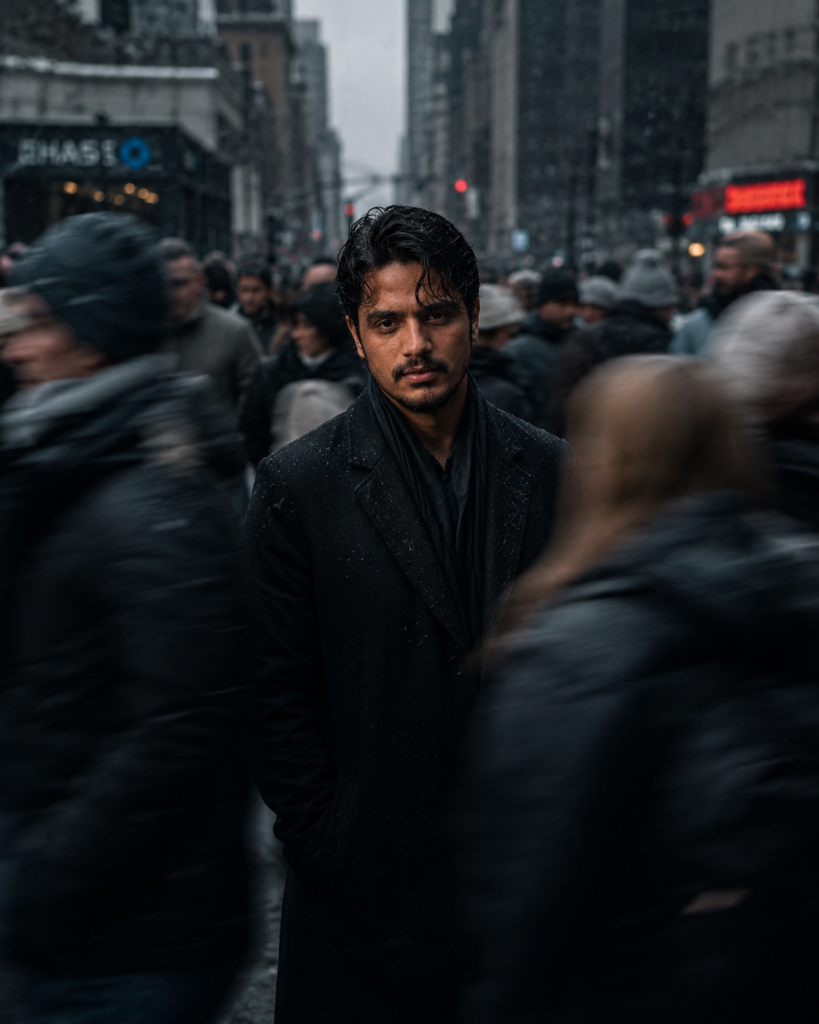
This style emphasizes emotional distance and creates a timeless cinematic look. Neutral clothing, soft daylight, and subtle color grading work best for this composition.
Prompt 2: Rainy Street Cinematic Portrait
Rain adds another emotional layer by introducing reflections, texture, and mood.
Wet streets naturally enhance cinematic photography because reflections amplify depth and lighting.
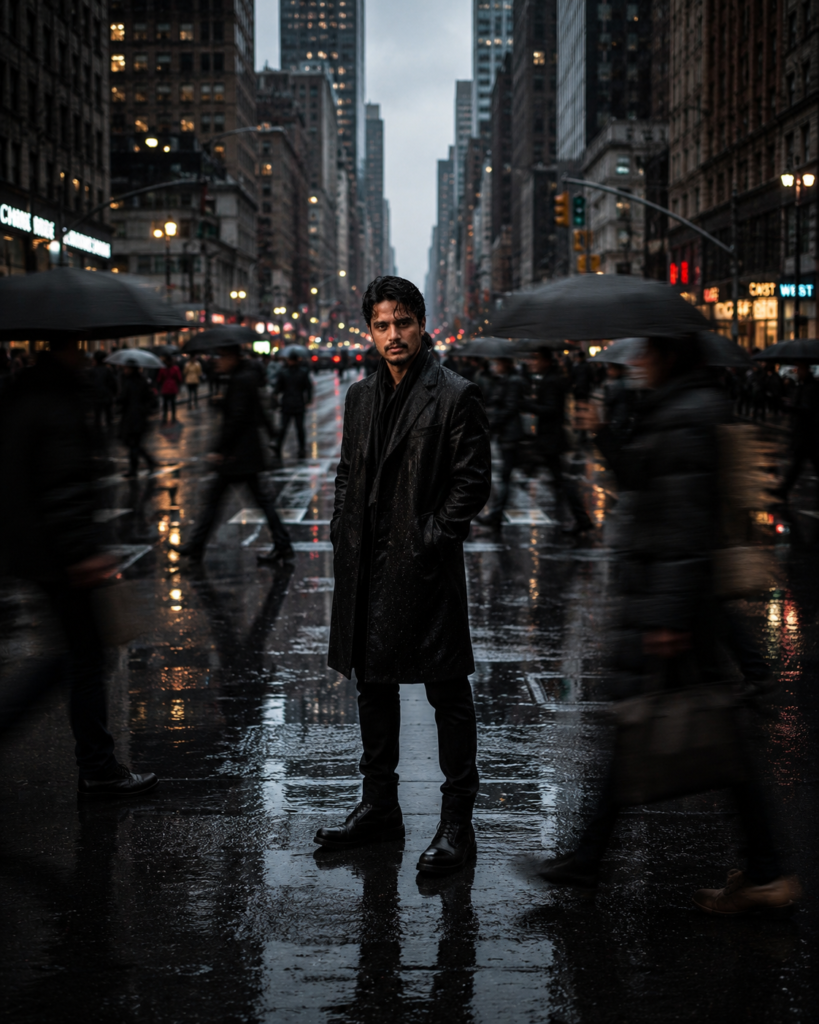
Rain also creates beautiful reflections from traffic lights, buildings, and street lamps, making AI-generated portraits appear significantly more realistic.
Prompt 3: Top-Down Cinematic Perspective
Changing the camera angle dramatically changes the emotion.
A top-down perspective makes the subject appear small against the overwhelming movement of the city.
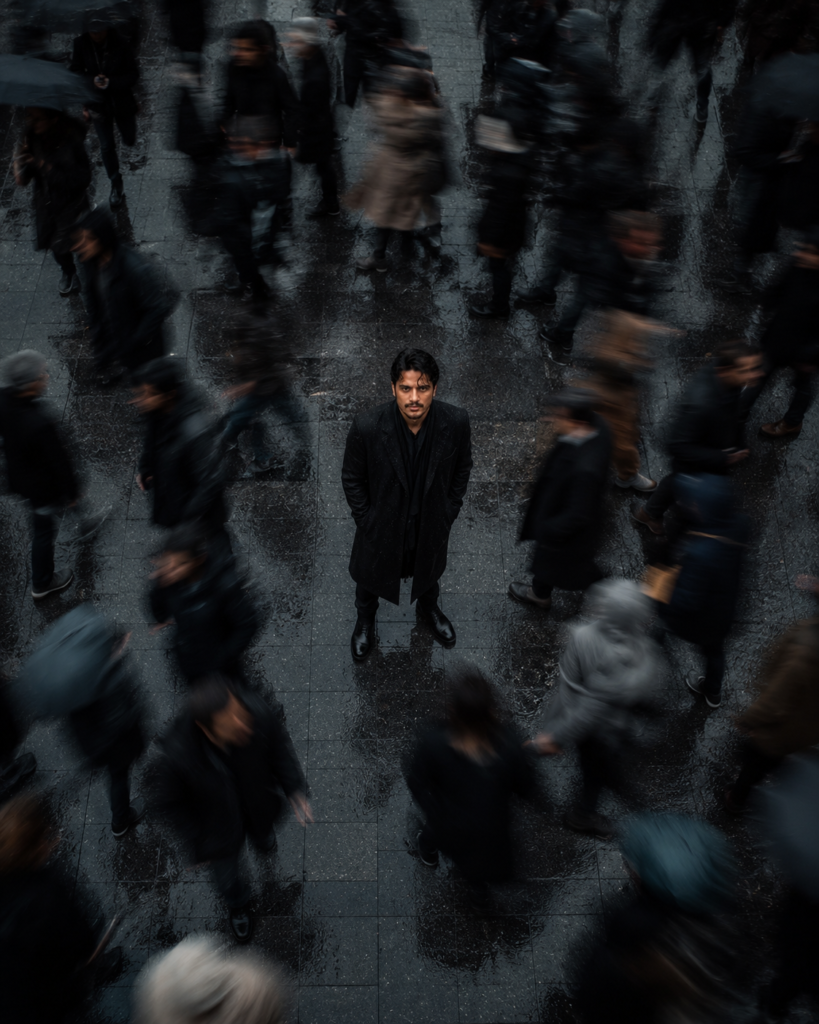
This perspective is commonly used in modern films because it visually represents isolation and vulnerability.
Prompt 4: Finding Joy in Chaos
Not every cinematic portrait has to feel sad.
A genuine smile completely changes the emotional story.
Instead of loneliness, the portrait now communicates resilience, confidence, and hope.
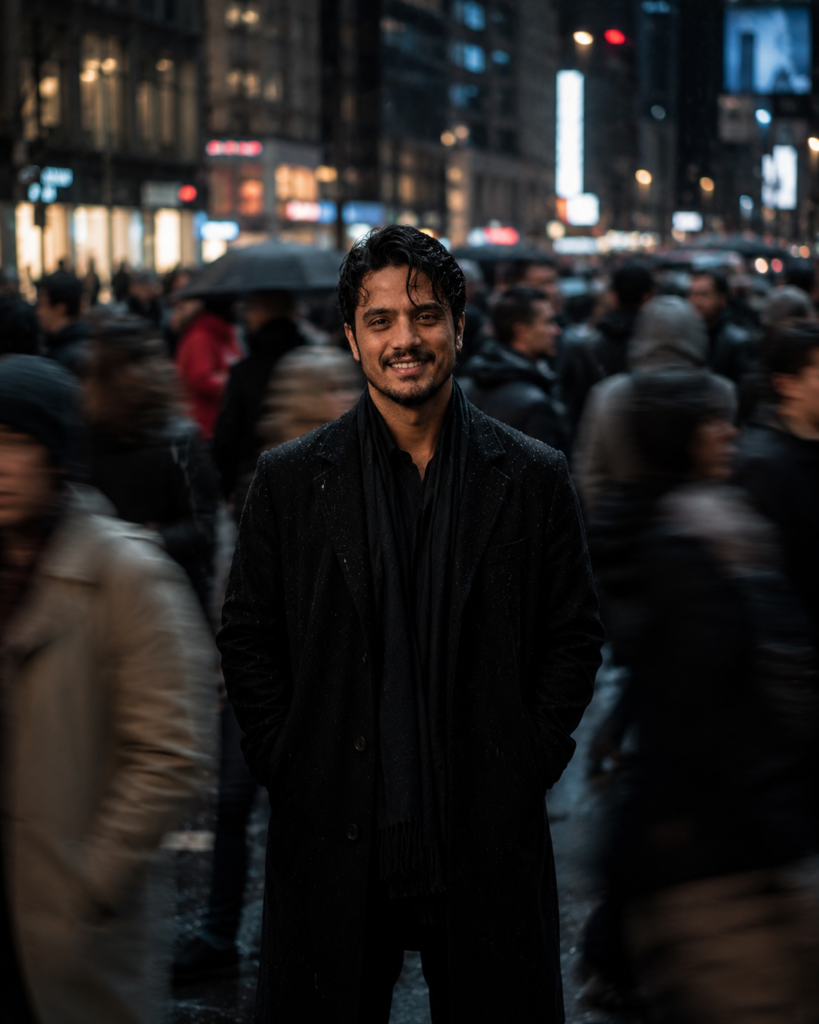
This variation works exceptionally well for motivational posts, personal branding, and inspirational content.
Prompt 5: Minimalist Female Urban Portrait
A simple outfit often creates stronger cinematic compositions.
Black outerwear paired with a white t-shirt keeps attention on facial expressions while maintaining an editorial aesthetic.
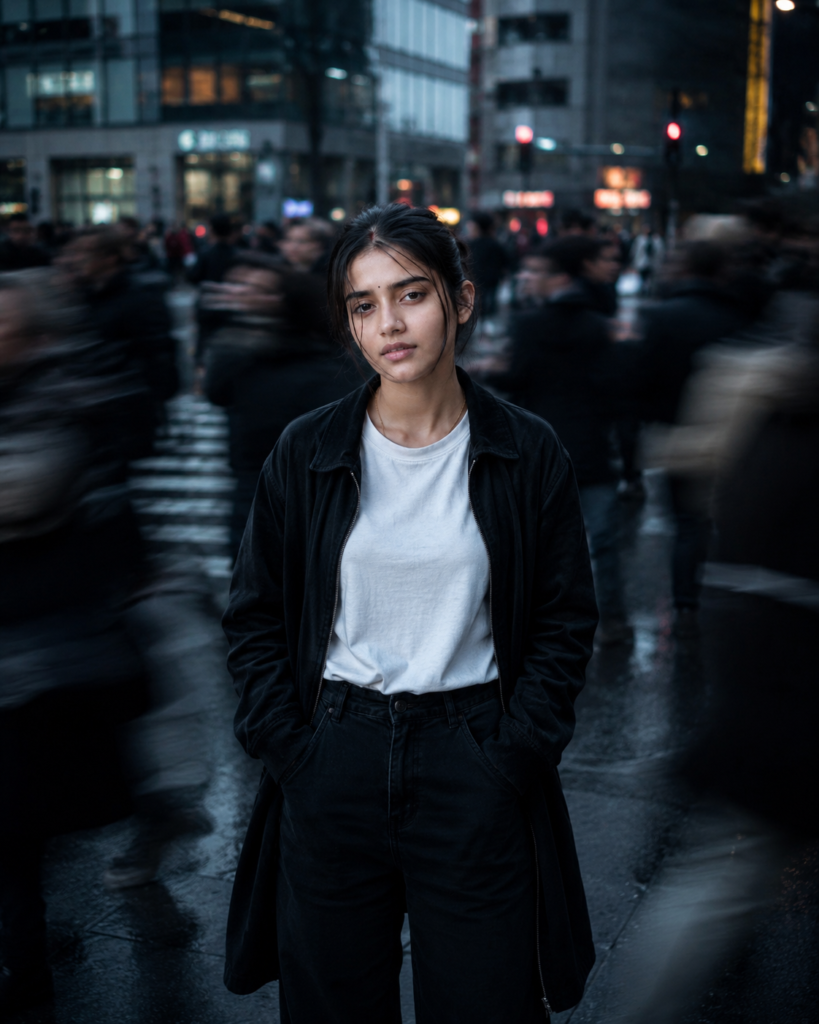
Minimal fashion allows the surrounding environment and lighting to become part of the storytelling.
Prompt 6: Neon Night Cinematic Portrait
Nighttime transforms the entire mood.
Neon lights, glowing billboards, wet streets, and blurred traffic create a futuristic cinematic atmosphere inspired by modern films.
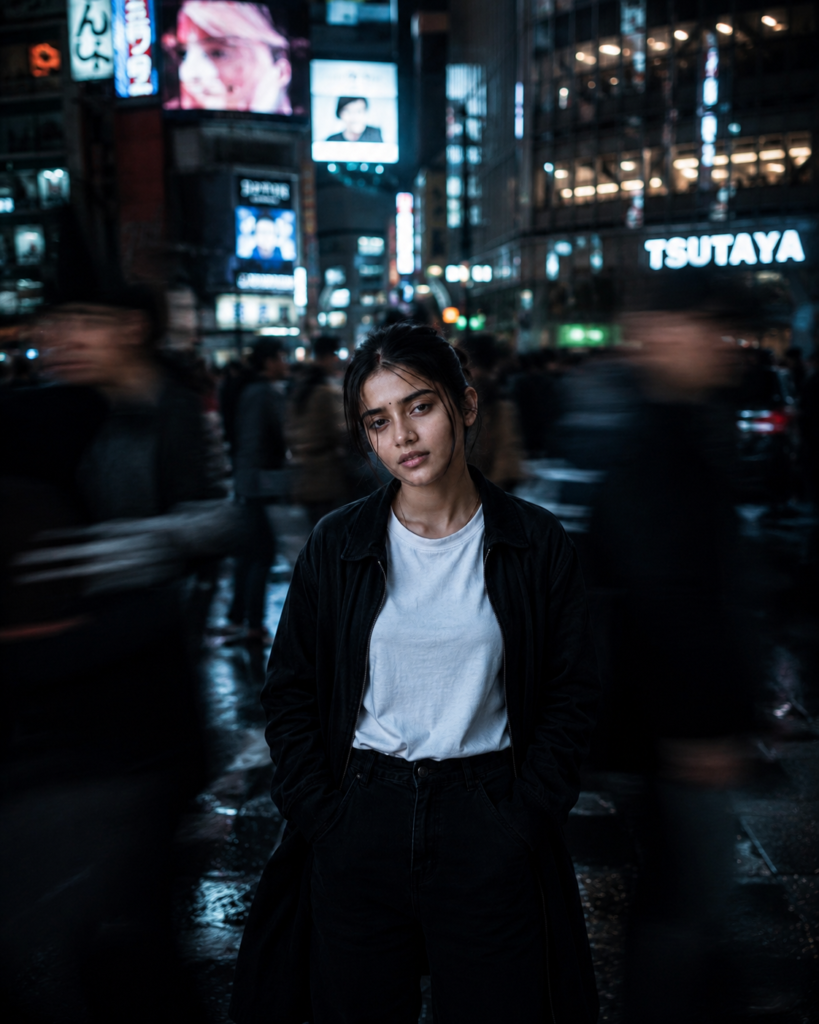
Blue lighting mixed with warm neon reflections creates one of the most popular cinematic color palettes used in contemporary photography.
AI Prompt Tips for Better Results
If you’re generating these portraits using AI tools like ChatGPT Images, Midjourney, Flux, Ideogram, or other image generators, consider these techniques:
- Mention motion blur instead of simply saying “moving people.”
- Add long exposure photography for realistic blur.
- Include 85mm lens or 50mm lens for natural portrait compression.
- Use shallow depth of field to separate the subject.
- Request ultra realistic editorial photography instead of digital art.
- Add cold cinematic tones, desaturated colors, or moody lighting depending on the desired atmosphere.
- Keep clothing descriptions simple and timeless for cleaner compositions.
Best AI Tools for This Style
These prompts work well across multiple AI image generators:
- ChatGPT Image Generation
- Midjourney
- FLUX
- Ideogram
- Leonardo AI
- Recraft AI
- Google Imagen
- Kling AI (for image-to-video animation)
Each platform interprets prompts differently, so experimenting with lighting, camera angle, and facial expression can produce unique results.
Final Thoughts
Cinematic motion blur portraits are more than just visually impressive—they tell stories. Whether the emotion is loneliness, resilience, hope, or quiet confidence, this style transforms ordinary portraits into memorable works of art.
By combining realistic street photography, motion blur, cinematic lighting, and strong emotional direction, you can create images that stand out across Instagram, Pinterest, blogs, and digital portfolios.
If you’re passionate about AI-generated photography, mastering this aesthetic is a valuable addition to your creative toolkit. Start with these prompts, experiment with different environments and emotions, and develop a signature style that resonates with your audience.