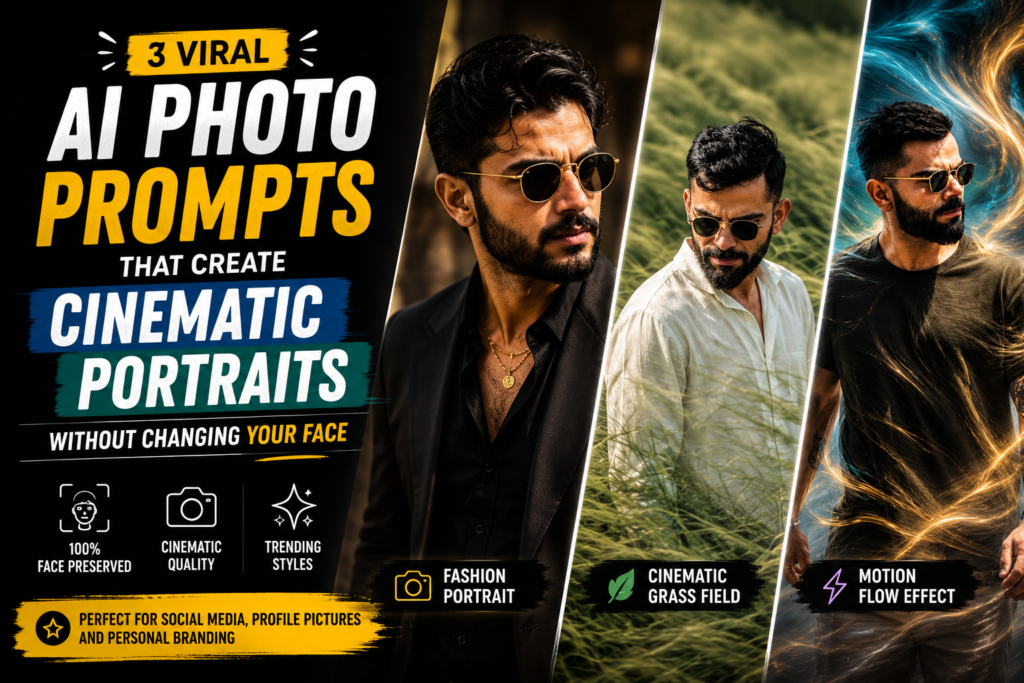
Some photos are taken to be seen. Others are created to be felt.
The three portraits in this collection aren’t just visually striking—they tell a story of emotion, confidence, transformation, and peace. Each frame captures a different version of the same person, creating a cinematic journey that feels like scenes from a movie rather than ordinary photographs.
Whether you’re an AI art enthusiast, a photographer looking for inspiration, or someone searching for unique portrait ideas, these images prove that storytelling is what makes a portrait unforgettable.
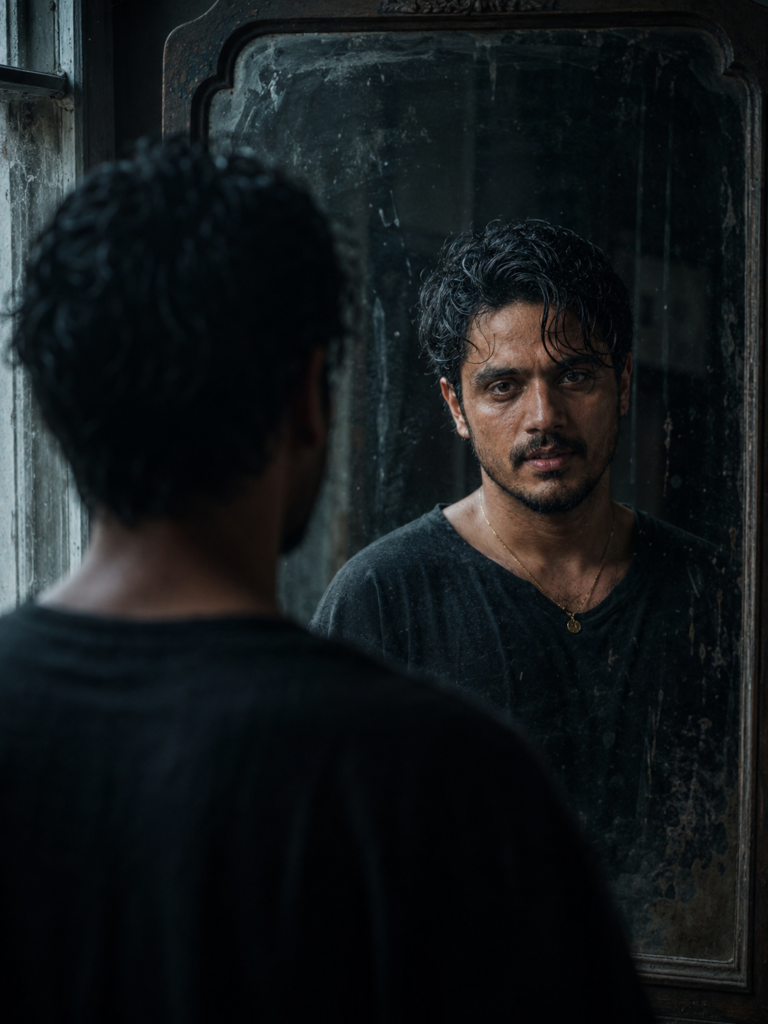
1. The Mirror Never Lies
The first image immediately grabs attention with its moody atmosphere. A dusty vintage mirror, dim natural light, and an intense expression combine to create a feeling of quiet self-reflection.
Unlike traditional portraits where the camera focuses directly on the subject, this composition tells the story through a reflection. The blurred back of the subject contrasts beautifully with the sharp reflection in the mirror, symbolizing the difference between how the world sees us and how we truly see ourselves.
Every detail contributes to the cinematic mood:
- Soft natural window light
- Dark vintage room
- Dusty mirror texture
- Emotional facial expression
- Muted cinematic color grading
- Shallow depth of field
The image feels almost like a scene from an award-winning psychological drama. Instead of forcing emotion, it lets silence tell the story.
This is one of the reasons mirror portraits have become incredibly popular in cinematic photography—they invite viewers to imagine what the subject is thinking.
2. Chasing Sunsets at the Beach
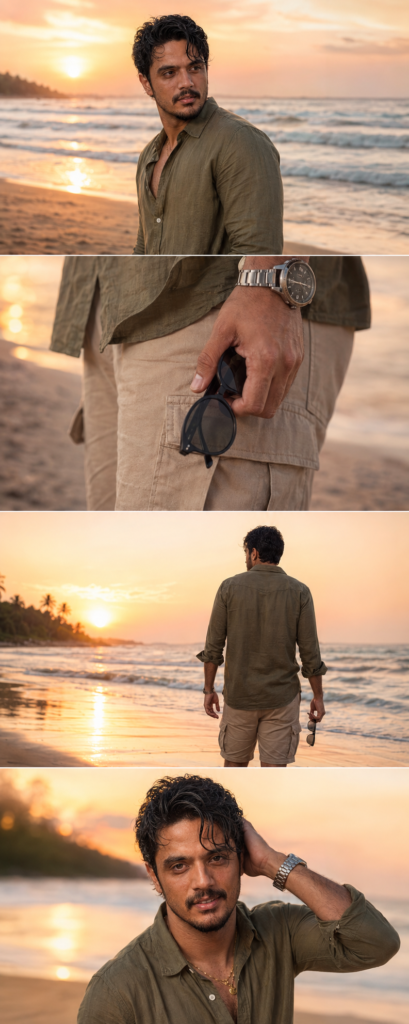
If the first portrait represents introspection, the beach collection represents freedom.
Golden-hour lighting transforms an ordinary beach into a dreamlike setting where warm sunlight wraps around every frame. Rather than focusing on only one angle, the collection captures multiple perspectives that together create a complete visual narrative.
The first portrait shows quiet confidence while looking toward the horizon.
The second frame focuses on subtle lifestyle details—the watch, sunglasses, relaxed clothing, and casual pose. Small elements like these make portraits feel authentic rather than overly staged.
The third image, photographed from behind, shifts the focus away from the face and toward the environment. Sometimes the strongest storytelling happens when the subject isn’t looking at the camera at all.
The final close-up completes the series with a relaxed expression and natural smile, making the entire collection feel personal and genuine.
Golden-hour beach portraits remain timeless because they naturally provide:
- Warm skin tones
- Soft shadows
- Beautiful ocean reflections
- Romantic atmosphere
- Natural color harmony
- Cinematic depth
Instead of relying on heavy editing, sunset light does most of the creative work.
3. Peace Beneath the Surface
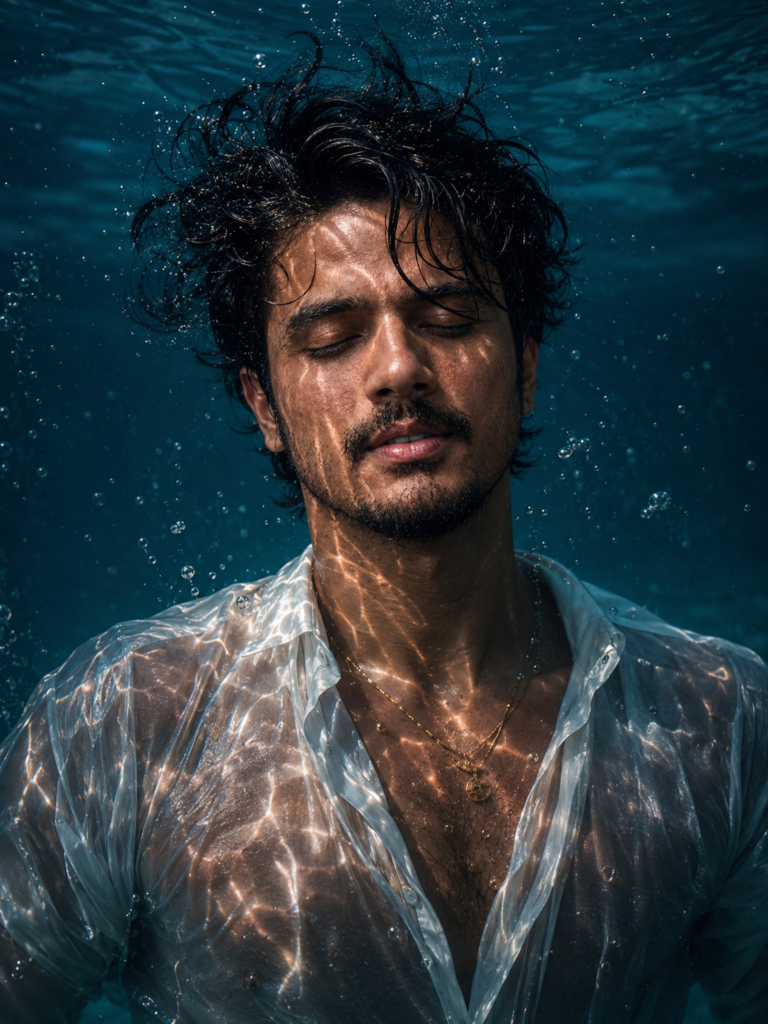
The underwater portrait is perhaps the most artistic image in the collection.
Rather than creating drama through action, it creates emotion through stillness.
Eyes closed.
Hair floating naturally.
A soaked white shirt moving gently with the water.
Sunlight dancing across the skin through moving water.
Tiny air bubbles surrounding the subject.
Everything comes together to create a peaceful moment that feels almost surreal.
Underwater portraits are technically difficult because every small movement changes the composition. Hair, clothing, lighting, and bubbles all become part of the artwork.
The transparent white shirt catches the moving light beautifully while the water caustics create patterns that no studio light can truly replicate.
Instead of appearing heavy, the subject seems almost weightless.
The image communicates calmness, vulnerability, and freedom all at once.
It reminds us that silence can sometimes be more powerful than words.
Why Cinematic Portraits Feel Different
Most portrait photography focuses on making someone look attractive.
Cinematic portraits aim to make viewers feel something.
That’s the biggest difference.
Instead of asking,
“Does this person look good?”
the viewer begins asking,
“What’s the story here?”
Storytelling creates emotional connection.
Color grading creates mood.
Lighting creates atmosphere.
Composition creates mystery.
Expression creates authenticity.
When all these elements work together, even a single portrait can feel like an entire movie scene.
The Role of AI in Modern Portrait Creation
Artificial intelligence has transformed creative photography in ways that seemed impossible just a few years ago.
Today, creators can generate highly realistic cinematic portraits using detailed prompts while preserving facial identity, natural skin texture, and authentic expressions.
Instead of replacing creativity, AI expands it.
Photographers and digital artists can experiment with:
- Underwater cinematic scenes
- Beach sunset portraits
- Vintage mirror photography
- Rain photography
- Dark fantasy concepts
- Luxury lifestyle portraits
- Emotional storytelling
- Fashion editorials
The real magic doesn’t come from pressing a button.
It comes from writing the right prompt.
The more detailed the prompt, the more realistic and cinematic the final result becomes.
Small Details Create Big Impact
One lesson these portraits teach is that small details matter.
Wet hair instantly changes mood.
Natural wrinkles in clothing add realism.
Jewelry creates personality.
Eye direction changes emotion.
Backlighting creates depth.
Even tiny reflections in the eyes can completely transform a portrait.
Professional-looking AI portraits are rarely created with short prompts.
Instead, they’re built layer by layer using precise descriptions of lighting, camera angles, lens choices, clothing, expressions, colors, atmosphere, and environment.
Creating Images That Tell Stories
Every creator eventually reaches a point where realism alone isn’t enough.
People remember emotion.
They remember atmosphere.
They remember stories.
That’s exactly why cinematic portrait prompts have become so popular across Instagram, Pinterest, and creative communities.
A portrait that tells a story receives far more engagement than one that simply looks beautiful.
When viewers pause to imagine what happened before or after the photo was taken, you’ve created something memorable.
Final Thoughts
These three portraits represent three completely different emotions:
Reflection — understanding yourself.
Freedom — embracing the journey.
Peace — finding calm beneath the chaos.
Together, they demonstrate how powerful cinematic portrait photography can become when storytelling, lighting, composition, and AI creativity come together.
If you’ve ever wanted to create portraits that look like scenes from a Netflix film or a Hollywood movie poster, remember this:
The camera captures the image, but the story captures the audience.
And with the right prompt, imagination has no limits.