Written by Kanchan Kaswan, 22, someone who spends far too much time experimenting with prompts and far too little time admitting how much fun it is. This blog is where those experiments turn into articles, one obsession at a time.
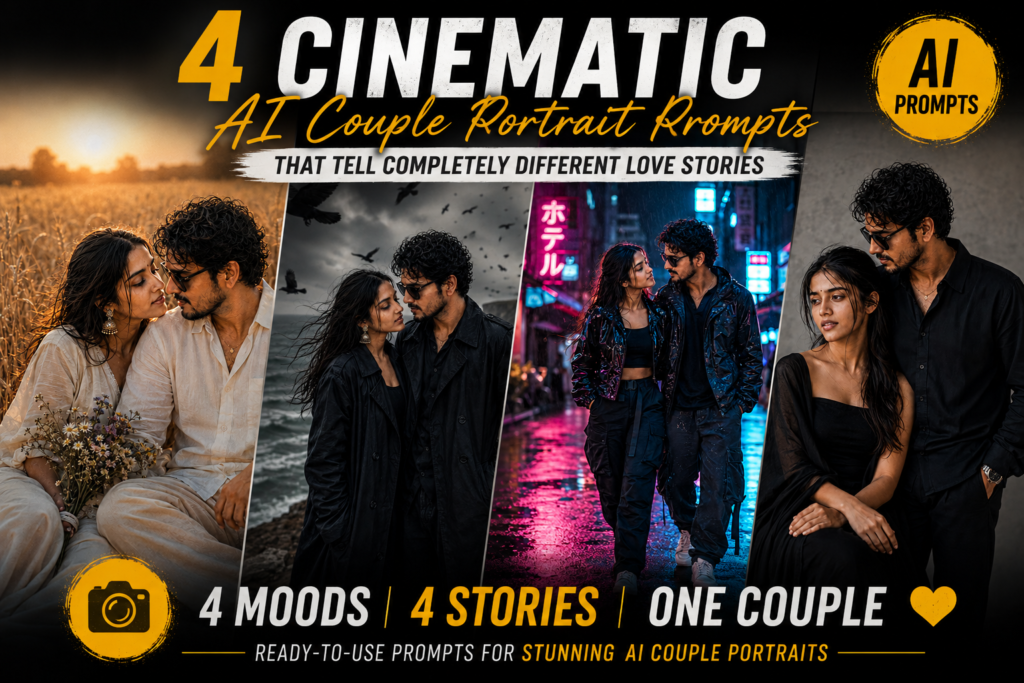
If your Instagram feed has felt a little different lately, you’re not imagining it. Somewhere between the travel reels and the outfit-of-the-day posts, a new kind of couple photo has started showing up everywhere — moody, cinematic, almost like a still from a film you’ve never seen but somehow recognize. No studio, no photographer, no destination shoot. Just two people, a reference photo, and a well-written prompt.
This is the AI couple portrait trend, and it’s quietly become one of the most engaging formats on the platform right now.
Why This Trend Is Working
Instagram has always rewarded content that stops the scroll, but lately, it’s rewarding something more specific: content that feels aspirational and personal at the same time. A generic stock-style couple photo doesn’t do that. But an AI-generated portrait of an actual couple — using their real faces — dropped into a stormy cliffside scene or a rain-soaked rooftop at dusk? That hits differently. It’s recognizable enough to feel authentic, but stylized enough to feel like art.
There’s also a practical reason this format is spreading so fast. A single reference photo of two people can now be turned into an entire themed carousel — different outfits, different settings, different moods — without ever leaving the house. For couples, that’s a low-effort way to post something that looks like it took a production budget. For creators and pages built around AI art, it’s a goldmine of shareable, saveable content.
The Secret Isn’t the Setting — It’s the Consistency
Here’s what most people get wrong when they first try this. They treat every slide in a carousel as its own separate creation, changing the wording completely each time. The result? The couple looks slightly different in every photo. Same people, technically, but the face shape shifts, the expression feels off, something about them just doesn’t match from one image to the next.
The pages getting this right are doing something much simpler. They’re locking a “base” description of the couple — their features, their pose style, the overall photographic tone — and only changing the part of the prompt that describes the setting and wardrobe. Everything else stays exactly the same, word for word, across every image in the set.
That one small habit is the difference between a carousel that looks like a cohesive editorial shoot and one that looks like five random AI images stitched together.
Building a Themed Couple Carousel, Step by Step
The format that’s performing best right now follows a simple structure: one couple, one fixed identity description, and five to seven wildly different worlds for them to appear in.
Start with a base line that never changes. Something like:
“Same couple as reference images, consistent facial features, [pose/expression], cinematic portrait, editorial photography, shallow depth of field.”
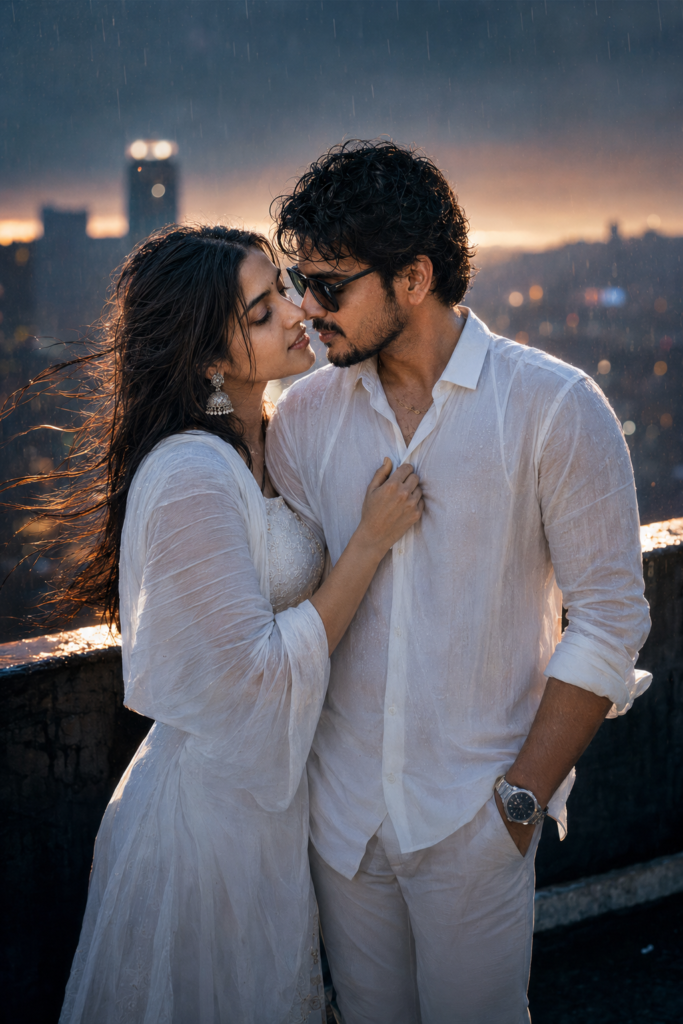
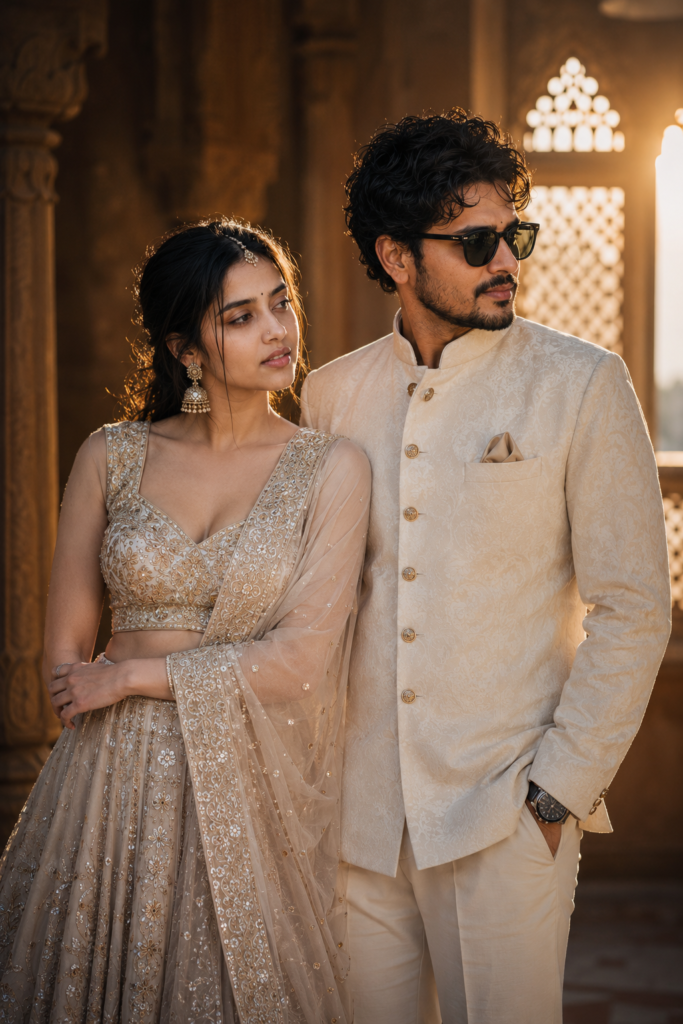
Then, for each slide, swap out only the setting and clothing details attached at the end. A monsoon rooftop scene with rain and city lights blurred behind them. A regal heritage look with traditional embroidered clothing inside a sunlit courtyard. A neon-drenched cyberpunk alley with wet pavement and reflective lighting. A quiet countryside field at golden hour. A dramatic, storm-lit gothic scene with dark coats and overcast skies. A festival night full of sparklers and warm bokeh. A clean, minimalist studio portrait with muted tones.
Each one feels like a completely different photoshoot. But because the identity description at the front of the prompt never moves, the couple looks like the same two people throughout — just living seven different lives.
Why the Themes Matter as Much as the Technique
Not every aesthetic performs the same way, and that’s worth paying attention to before you build a full carousel around one idea. Moody, high-contrast themes — storm skies, dark coats, dramatic lighting — tend to get disproportionately more saves and shares, because they look intentional and expensive even though they took minutes to generate. Heritage and traditional-wear themes do especially well with audiences who want to see culturally rooted content reimagined in a cinematic way, rather than the usual studio-style photography. Softer aesthetics, like countryside or festival scenes, tend to pull higher comment engagement, because they read as warmer and more personal, which invites people to react rather than just scroll past.
A strong carousel usually mixes at least one moody theme with one warm theme, so the set doesn’t feel one-note. Opening on the most visually striking slide — usually the gothic or heritage look — and closing on something lighter tends to keep people swiping all the way through.
A Trend That Rewards Small Details
What makes this trend interesting isn’t really the technology behind it. Reference-based AI portraits have existed for a while. What’s new is how deliberately people are using them — treating a couple’s “look” the way a film sets a character’s costume design, keeping it locked across scenes so the story feels continuous.
That attention to consistency is a small thing, technically. But it’s the reason some AI couple carousels look like a professional editorial spread and others look like a pile of disconnected images. The prompt writing matters. The wardrobe choices matter. But the one habit that quietly separates good AI content from great AI content is refusing to let the base description drift, slide after slide.
If you’re experimenting with this format yourself, start with just two contrasting themes before building out a full set. Get the identity lock right first — same face, same expression logic, same photographic language — and the more elaborate scenes will hold together on their own.
This is still early days for this particular trend, which means there’s real room to make it your own before it becomes oversaturated. The couples doing it well right now aren’t necessarily using better tools than everyone else. They’re just being more disciplined about the one part of the process that actually holds the whole carousel together.
FAQ
Do I need a professional photo to start, or will any picture work?
A clear, well-lit photo of each person’s face is really all you need. It doesn’t have to be a studio shot — a decent phone photo with good lighting and a direct angle works just as well, sometimes better, than something overly posed.
Why does my couple’s face change slightly between photos in the same carousel?
This almost always comes down to the prompt being rewritten from scratch each time instead of keeping a fixed identity description. Reuse the same opening line word-for-word across every image and only change the setting and outfit details at the end.
How many themes should one carousel actually include?
Five to seven tends to be the sweet spot. Fewer than that and the set feels thin; more than that and engagement usually starts to drop off before people reach the end.
Should every theme be moody and cinematic, or is that overdoing it?
Mixing is better than going all-in on one mood. Pair at least one dramatic, high-contrast theme with something warmer and softer, so the carousel has range instead of feeling repetitive.
Is this trend only useful for couples with a personal page, or can brands use it too?
Both. Couples use it for personal content, but the same identity-locking technique works for any recurring character concept — including brand mascots or recurring models — anywhere consistency across a themed set matters.
Final Thought
Trends like this move fast, and the version everyone’s doing today will look outdated in a few months. But the underlying skill — describing something precisely enough that it stays consistent across multiple images — isn’t going anywhere. That’s less a trick specific to couple photos and more a habit worth building into how you prompt in general. Get that part right, and whatever the next trend turns out to be, you’ll already be ready for it.