There’s something about a rainy window that makes people stop scrolling.
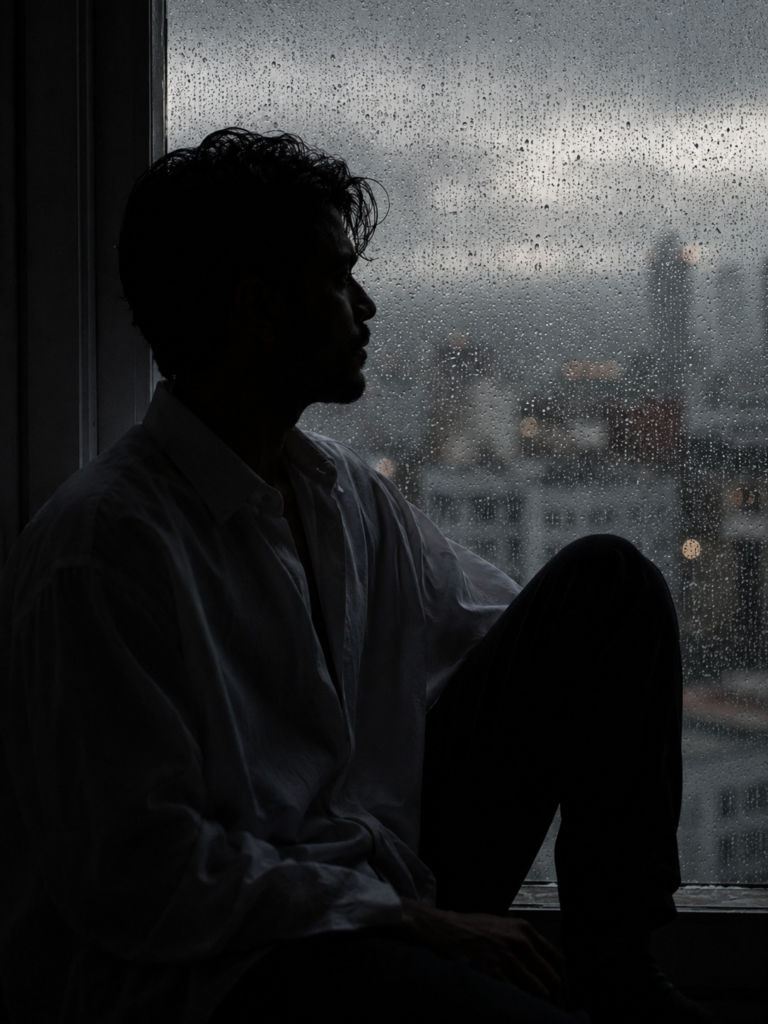
Maybe it’s the memory of staring out at grey skies as a kid, or the way rain always seems to show up in movies right when a character is about to have a moment of realization. Whatever the reason, this particular aesthetic — a lone figure sitting beside a rain-streaked window, face lost in shadow — has quietly become one of the most shared AI portrait styles on Instagram and Pinterest right now.
If you’ve been noticing these images pop up in your feed and wondering how people are getting that exact cinematic look, you’re in the right place. We’re breaking down why this style works so well, and at the end, you’ll get the full prompt to try it yourself.
Why Rainy Window Portraits Are Trending
Not every great photo needs bright lighting or a face full of expression. Sometimes the opposite is true — the less you show, the more people want to look.
That’s basically the whole idea behind the rain window silhouette portrait. You place a subject next to a rain-covered window, let the natural daylight outline just their shape, and suddenly the image feels like it belongs in a film rather than a camera roll. No dramatic pose, no big smile, nothing overdone. Just quiet mood.
It’s become a favorite in AI art communities for a simple reason: it doesn’t look like AI. It looks like something a photographer spent hours setting up on a rainy afternoon.
A Portrait That Tells a Story Without Saying Anything
Here’s what makes this composition genuinely clever — it barely shows you anything, and yet it feels full of meaning.
A single person. Soft light coming through wet glass. A blurry skyline somewhere in the background. That’s really all it takes. Because the face is hidden, your brain automatically starts filling in the blanks. Is this person sad? Thinking about someone? Just enjoying the rain? Nobody knows, and that’s exactly why it works.
Traditional portraits ask you to look at someone. This one asks you to imagine them.
Why It Feels So Cinematic
If you’ve ever paused a movie just to admire a scene, there’s a good chance it involved a silhouette or a window shot like this one. Directors lean on this technique constantly because it does a lot of emotional heavy lifting without needing dialogue or expression.
The deep shadows, the soft edge of light along the jaw and shoulder, the muted grey tones — it all mimics what you’d expect from a real 35mm film still, not something generated on a screen. That’s the whole appeal. It doesn’t feel artificial. It feels like a frame someone actually captured.
Less Really Is More Here
A lot of AI portraits go big — bold colors, dramatic effects, fantasy backdrops. Nothing wrong with that, but it’s a different game entirely.
This style strips almost everything away. No busy background, no competing colors, no distracting props. Just a person, a window, and rain. And because there’s so little going on, your eye has nowhere else to go except the mood of the whole scene. Sometimes the photo that shows the least ends up saying the most.
It Borrows From Real Editorial Photography
Professional editorial photographers rarely need a studio to make something look expensive. Give them a window, a bit of weather, and natural light, and they’ll make it work every time.
That’s essentially the blueprint here. The rain-covered glass isn’t just a backdrop — it’s doing narrative work. The soft reflections, the hazy city lights bleeding through the droplets, the quiet indoor setting — together they create something that could genuinely pass for a page out of a fashion magazine.
Where This Style Actually Gets Used
This isn’t just a one-off trend people post and forget. Creators are using it for:
- Instagram profile and feed portraits
- Pinterest aesthetic boards
- Personal branding shoots
- Album cover concepts
- Poetry or quote graphics
- Website banners and hero images
- Digital art portfolios
Because it doesn’t rely on trendy colors or effects that age quickly, it holds up well over time — which is rare for anything that goes viral.
Why AI Makes This So Accessible
Normally, getting a shot like this would mean waiting for the right weather, finding a window with good light, and having someone who knows how to shoot silhouettes properly. That’s a lot of moving pieces.
With the right prompt, you can skip all of that and still land on something that looks convincingly real — rainy afternoon, natural window light, cinematic framing, all of it. It’s a good reminder that AI image generation isn’t only about photorealistic faces. It can just as easily be used to build mood and atmosphere, which honestly is a lot harder to fake convincingly.
A Few Tips Before You Try It
If you want your version to turn out well, a couple of small things make a real difference:
Start with a clear, well-lit reference photo — the AI needs a good look at your features to keep the silhouette recognizable. Stick to a vertical composition, since that’s what gives it the cinematic feel. And try not to overcomplicate the background — the rain and the soft daylight should be doing most of the work, not extra details competing for attention.
Small adjustments like these are usually the difference between an image that looks staged and one that actually feels cinematic.
Why This Style Isn’t Going Away Anytime Soon
Trends built around bright colors or flashy effects tend to burn out fast. This one’s different because it’s not really about a “look” — it’s about a feeling. Solitude, reflection, quiet storytelling. Those things don’t really go out of style.
As more people experiment with AI photography, styles like this one — the ones that feel emotional and restrained rather than loud — are the ones sticking around.b
Here’s the full prompt so you can recreate this look yourself:
Final Thoughts
You don’t always need a complicated setup or a dozen effects to make an image memorable. Sometimes it just takes the right light, the right mood, and knowing when to hold something back instead of showing it all.
If you’re building out an AI photography portfolio, working on content for social media, or just want to experiment with a more cinematic style, this is a great one to start with. Grab the prompt above, try it with your own reference photo, and see what kind of story your silhouette tells.