Cinematic Portrait Prompt That Makes Forest Photos Go Viral
You scroll past hundreds of AI images every day.
Most look perfect. That’s the problem.
The images people actually stop for often feel imperfect, emotional, and real. This cinematic portrait prompt creates exactly that kind of photo — the type that makes someone pause, look twice, and save it for later.
If you love photography aesthetics, Pinterest-worthy visuals, or social media content that stands out, this cinematic portrait prompt is worth trying.
Why This Cinematic Portrait Prompt Works So Well
The internet is flooded with sharp, flawless AI portraits.
But in 2026, the trend is shifting toward images that feel human.
Think film grain. Light leaks. Soft motion blur. Natural sunlight. Imperfect framing.
The prompt we’re analyzing combines all of those elements into a single scene:
- A quiet forest setting
- Cinematic lighting
- Analog film imperfections
- Emotional expression
- Dreamy color grading
- Natural movement
When these ingredients work together, the image feels less like AI and more like a frame from an independent movie.
What Makes a Cinematic Portrait Prompt Different?
A cinematic portrait prompt focuses on storytelling rather than appearance alone.
Instead of saying:
“Generate a beautiful woman in a forest.”
It creates a moment.
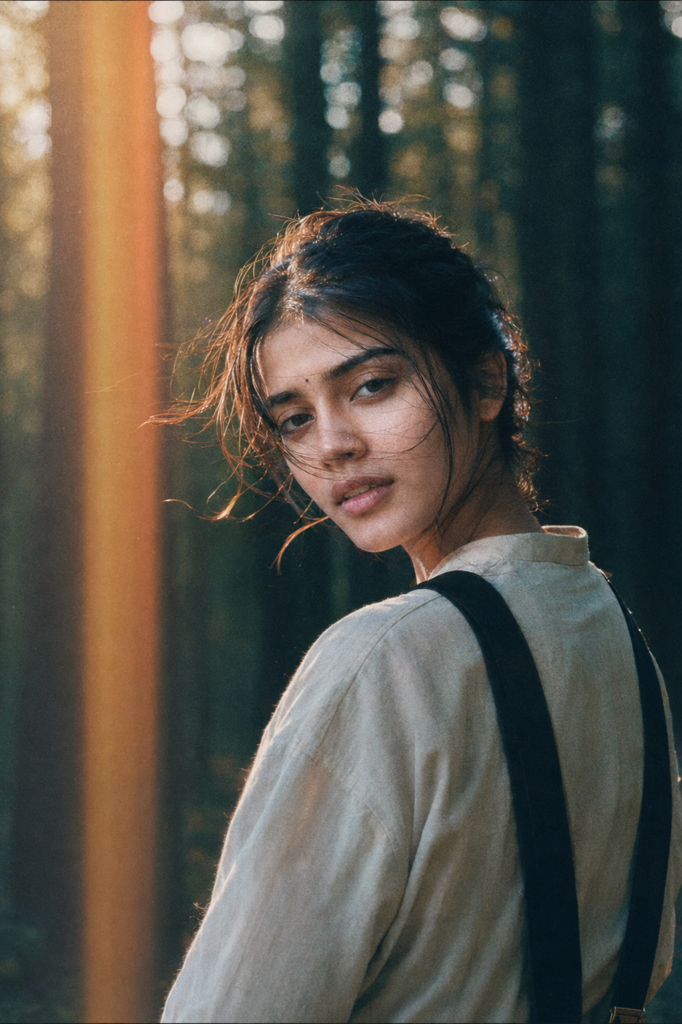
The subject is turning toward the camera.
The sunlight hits only parts of her face.
Her hair moves in the wind.
The forest fades into soft bokeh behind her.
That tiny story creates emotion, and emotion creates engagement.
What Is a Cinematic Portrait Prompt?
A cinematic portrait prompt is an AI image prompt designed to create movie-like photographs using dramatic lighting, realistic composition, color grading, atmosphere, and visual storytelling.
These prompts often include film-inspired elements such as grain, light leaks, motion blur, shallow depth of field, and emotional expressions. The goal is to make an image feel like a captured moment rather than a posed photograph.
The Secret Ingredients Behind Viral Forest Portraits
1. Natural Light Instead of Studio Light
Soft sunlight filtering through trees creates depth automatically.
When light and shadow fall unevenly across the face, the image feels authentic.
That’s why photographers often shoot during golden hour.
AI image generators respond surprisingly well to this detail.
2. Motion Creates Life
Static portraits often feel artificial.
A slight head turn.
Hair moving in the breeze.
Loose strands catching sunlight.
Small movements create a stronger emotional connection.
3. Analog Film Effects
One thing I’ve noticed after testing dozens of portrait prompts is that film-inspired images consistently get more saves on Pinterest.
Not because they’re technically better.
Because they feel nostalgic.
Elements like:
- Film grain
- Light leaks
- Film burn
- Slight blur
- Lens distortion
make viewers feel something.
And feeling something is what drives engagement.
4. Teal and Orange Color Grading
If you’ve watched modern films, you’ve seen this color combination everywhere.
Why?
Because warm skin tones stand out beautifully against cooler backgrounds.
The forest shadows become rich teal.
The sunlight becomes warm orange.
The result feels cinematic instantly.
Key Elements You Should Include in Your Own Prompts
| Element | Why It Matters |
|---|---|
| Soft sunlight | Creates depth and mood |
| Hair movement | Adds realism |
| Film grain | Makes AI images feel authentic |
| Bokeh background | Separates subject from scene |
| Light leaks | Creates artistic imperfections |
| Teal-orange grading | Produces cinematic contrast |
| Emotional expression | Builds connection |
Why Gen Z Loves This Style
Gen Z grew up with polished social feeds.
Ironically, that makes imperfect visuals more attractive.
Images that look slightly flawed feel more believable.
A cinematic forest portrait combines:
- Vintage nostalgia
- Modern color grading
- Emotional storytelling
- Social media aesthetics
“Looks like a movie scene, but it’s AI.”
Curiosity drives clicks.
Clicks drive traffic.
Traffic drives growth.
Simple.
Common Mistakes People Make
Overloading the Prompt
Many creators keep adding details until the image becomes chaotic.
More words do not always mean better results.
Focus on:
- Lighting
- Mood
- Composition
- Subject emotion
Those four areas usually matter most.
Forgetting Atmosphere
Atmosphere is what separates a photo from a memory.
Mist.
Sun rays.
Film grain.
Forest haze.
These details create emotional depth.
Using Perfect Symmetry
Real photography isn’t perfect.
Allow slight imperfections.
A little imbalance often creates stronger visual interest.
Why This Style Will Stay Popular in 2026
AI image trends change quickly.
But emotional storytelling doesn’t.
The reason cinematic portrait prompts continue to perform is simple:
People connect with feelings more than technical quality.
A dreamy forest portrait doesn’t just show a person.
It creates a mood.
And mood is what people save, share, and remember.
If you’re creating content for Instagram, Pinterest, or Snapchat, start experimenting with cinematic portrait prompts today and see which emotions your audience responds to most.
SEO Details
Main Keyword: Cinematic Portrait Prompt
Related Keywords:
- AI portrait prompt
- cinematic photography prompt
- forest portrait AI image
- film aesthetic portrait
- viral AI image prompt
Image Alt Text:
Cinematic portrait prompt showing an Asian woman in a dreamy forest with film grain, light leaks, cinematic lighting, and vintage photography aesthetic.